
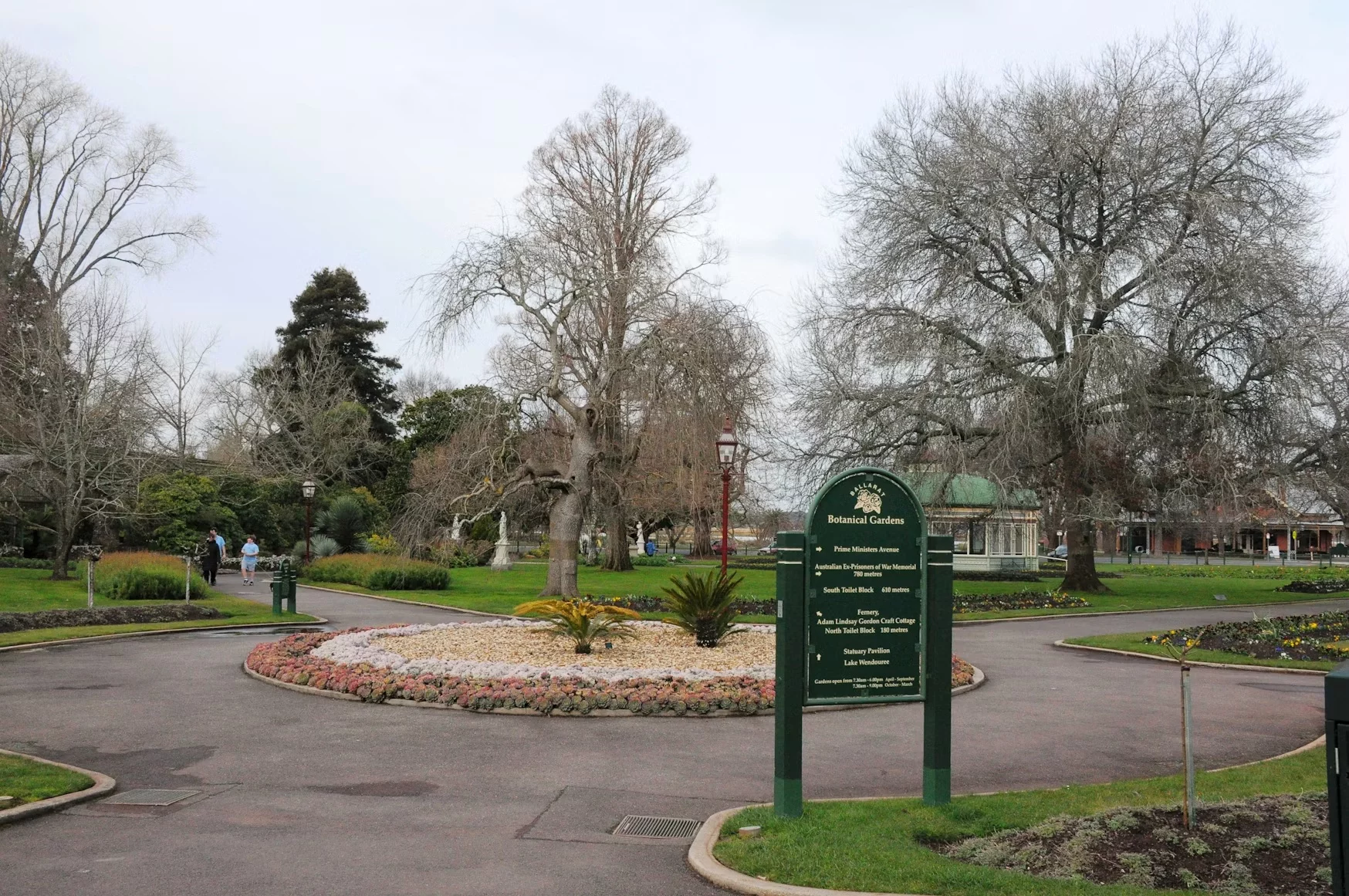
In 1851, news of a gold strike near Ballarat triggered one of the most dramatic population movements in Australian history. Within months, tens of thousands of people were camped on the goldfields. Within years, Ballarat had become one of the wealthiest cities in the British Empire.
The gold ran out. Many left. The city that remained had magnificent heritage architecture, strong civic institutions, a university, hospitals, and an economy that reinvented itself multiple times over 170 years.
In 2026, Ballarat is experiencing something that rhymes with that original discovery. Not gold — but value. Melbourne workers, investors, and tree-changers are finding that Ballarat offers something increasingly rare: a real city with real infrastructure, a median house price of approximately $525,000, and a rental market with a vacancy rate of 1.4%.
The parallel is not perfect. Ballarat’s median price has corrected from its 2022 peak. Growth is stabilising rather than accelerating. The city faces real challenges in retaining young workers and competing with Melbourne’s employment draw.
But there is a case here. And understanding it requires more than a quick look at recent price movements.
The Short Version
Ballarat is Victoria’s second-largest inland city, with a population of approximately 125,000-130,000 people. It sits 111 kilometres north-west of Melbourne CBD, approximately 75 minutes by train.
After a significant price run during the COVID tree-change period (2020-2022), Ballarat’s property market corrected. Median house prices declined approximately 6% over the 12 months to early 2026, from a post-COVID peak to approximately $525,000 currently. The rate of decline has been slowing — the market is stabilising, not falling away.
Rental vacancy is approximately 1.4%, indicating tight supply in the rental market and supporting rental income. Gross yields are approximately 4-4.2% for houses — above Melbourne’s average — and rents have been growing modestly.
The infrastructure pipeline is real and committed: the Ballarat West Employment Zone (438 hectares of industrial land), a new interstate Freight Hub (completion late 2026), and the $315 million Ballarat University Town project. A $673 million train manufacturing announcement will bring approximately 150 jobs directly to Ballarat.
This is not a suburb experiencing runaway growth. It is a regional city in post-correction stabilisation with genuine employment investment and an affordability profile that suits patient investors.
The Gold Rush Parallel
The original Ballarat gold rush of the 1850s was not just an economic event — it was a migration event. People came from Britain, Ireland, China, and across Australia chasing opportunity. The city they built together became a showpiece of Victorian-era wealth.
What happened after the gold peaked is the part that matters for investors: the people who stayed were those who found other reasons to be there. The university (founded 1870). The hospitals. The government institutions. The manufacturing base. The agricultural service economy.
The COVID property boom of 2020-2022 created a similar (though far less dramatic) migration pattern. Melbourne renters and buyers, given the freedom to work remotely, discovered that Ballarat offered space, affordability, and a genuine city experience at a fraction of the price. Prices jumped accordingly.
The boom corrected. Some people returned to Melbourne. But the underlying pull factors that brought them — infrastructure, affordability, liveability — did not disappear. They remain, and they are now being reinforced by deliberate investment from state and federal governments.
The investors who are looking at Ballarat in 2026 are not chasing a boom. They are looking at a city with genuine long-term credentials at a price that has come back from its peak. That is a different kind of opportunity.
Understanding What the Numbers Mean
What does “vacancy rate” tell you?
Rental vacancy rate measures the percentage of rental properties that are currently empty (listed for rent but not occupied). A rate below 2% is generally considered tight — meaning tenants are competing for available properties, rents are likely to grow, and landlords have pricing power.
Ballarat’s vacancy rate of approximately 1.4% is tight by any standard. It means the local rental market has more demand than supply, which is a positive signal for rental income. It also suggests that rents are unlikely to fall significantly in the near term.
What is a “price correction” and what does it mean for buyers?
A price correction occurs when property values decline after a period of above-trend growth. Corrections are a normal part of property market cycles — they do not indicate structural failure; they indicate the market returning toward sustainable levels after a period of excess.
Ballarat’s correction from its 2022 COVID-driven peak represents the unwinding of short-term demand that was driven by remote work flexibility rather than permanent economic change. The underlying city — its employment, population, and infrastructure — did not shrink during the correction.
For buyers, a market in correction or stabilisation can represent a better entry point than one at peak. The question is whether the correction is complete or continuing.
Investment Snapshot — Early 2026
| Metric | Ballarat | Regional VIC Benchmark | Greater Melbourne |
| Median House Price | ~$525,000 | ~$480,000-560,000 | ~$880,000 |
| 12-Month Price Change | approx. -6% | varies | approx. +2% |
| Gross Yield — Houses | ~4.0-4.2% | ~4-5% | ~3.4% |
| Rental Vacancy Rate | ~1.4% | ~2-3% | ~1.8% |
| Population | ~125,000-130,000 | n/a | n/a |
| Distance to Melbourne CBD | 111km/ ~75 min train | varies | n/a |
| Key Employment Sectors | Health, Education, Govt, Logistics | varies | n/a |
Source: PRD Research, InvestorKit, HTAG, ABS. Early 2026. Figures are indicative medians.
What the Housing Market Is Doing
Ballarat’s property market peaked in approximately 2022, driven by COVID-related demand from Melbourne buyers seeking space, affordability, and remote work flexibility. At that peak, properties were moving quickly, prices were running well above pre-COVID levels, and competition was intense.
That cycle unwound. As Melbourne office attendance returned, as interest rates rose, and as the initial excitement of regional living faded for some buyers, Ballarat’s market corrected. Median house prices declined approximately 6% over the 12 months to early 2026.
Critically, the pace of decline has been decelerating. The market is not in freefall — it is settling toward a new equilibrium. Inventory levels remain above their long-run average, which means buyers have more choice than they did at peak, but fewer are chasing each property. This is a buyer’s market by most measures.
For investors, the question is not whether Ballarat has fallen from its peak. It has. The real question is whether today’s price is more attractive than yesterday’s — and whether the city’s fundamentals support a recovery. On both counts, the case is stronger than the headline correction number suggests. At $525,000, Ballarat house prices are significantly below their Melbourne equivalents, yields are above Melbourne’s average, vacancy is tight, and the infrastructure pipeline is pointing in the right direction. A market in post-correction stabilisation with those credentials is not a warning sign. It is a potential entry point.
One practical consideration: Ballarat properties include a mix of character heritage homes (often requiring more maintenance), established 1970s-2000s stock, and a growing outer-suburb development pipeline. Each has a different maintenance cost profile, depreciation schedule, and tenant appeal. Investors should be specific about what type of property they are evaluating.
The Rental Market
The rental market in Ballarat is the strongest part of the current investment case.
A vacancy rate of approximately 1.4% means competition for rental properties is real. Tenants are not walking away from leases or easily finding alternatives. Landlords with well-maintained properties in good locations are generally achievingconsistent tenancy.
Gross yields of approximately 4.0-4.2% for houses are notably above Melbourne’s average of approximately 3.4-3.7%. On a $525,000 purchase, a 4.2% gross yield represents approximately $427 per week — before costs. That income contribution helps offset holding costs in a way that is more difficult at Melbourne prices.
One nuance: Ballarat’s rental tenant pool is different from Melbourne’s. The city draws renters who are often employed in healthcare, education, government, or logistics — stable employment sectors that tend to produce reliable tenants. This is a different tenant demographic from a speculative investor-heavy suburb where renters cycle in and out quickly.
Rents have been growing modestly in Ballarat, consistent with the broader rental supply tightness across regional Victoria. Nothing dramatic — but the trend is upward against the backdrop of low vacancy.
The Economy and Employment Picture
Ballarat’s economy is more diversified than it is often given credit for. The headline employment sectors are healthcare and social assistance, education and training, retail trade, public administration, and manufacturing. That is not a one-trick city — it is a regional hub with layered employment anchors.
Federation University Australia has a significant presence in Ballarat, providing both direct employment and a pipeline of graduates who often remain in the region. The healthcare sector, centred on Ballarat Health Services and St John of God Ballarat Hospital, is one of the largest employers in the region.
The infrastructure investment announced for Ballarat supports employment growth rather than just housing. The Ballarat West Employment Zone (438 hectares of industrial land managed by Development Victoria) is designed to attract manufacturing and logistics businesses to the region. The construction phase of the Ballarat Freight Hub — completion scheduled for late 2026 — directly supports local employment during construction and provides infrastructure that improves the region’s logistics competitiveness.
A $673.6 million investment to manufacture X’Trapolis 2.0 trains in Ballarat was announced recently, bringing approximately 150 direct jobs to the city. That is meaningful in a regional context.
The Ballarat University Town project — a $315.6 million investment in campus development expected to create 1,762 jobs during construction — is a long-term liveability and education investment that strengthens the city’s appeal to young workers and families.
The challenge Ballarat faces is the same challenge most regional cities face: retaining young workers who graduate or enter the workforce and are drawn to Melbourne’s employment depth and social scene. There is no simple answer to that pull. What Ballarat is doing is building more reasons to stay — and more jobs that make staying viable.
The Infrastructure Story
Three projects define Ballarat’s infrastructure investment story in 2026.
The Ballarat West Employment Zone is a 438-hectare Crown land industrial precinct managed by Development Victoria. It is designed to attract businesses that need large-format industrial space — manufacturing, logistics, warehousing, and advanced industry. As the precinct fills over time, it creates a self-reinforcing cycle: businesses bring workers, workers bring families, families need housing.
The Ballarat Freight Hub is jointly funded by the Victorian and federal governments, with construction underway and completion expected in late 2026. It provides access to road, rail, and port connections — an important piece of logisticsinfrastructure for regional businesses that need to move goods. Freight infrastructure typically has a longer-term economic effect than it receives short-term credit for.
The Ballarat University Town project is a $315.6 million campus development investment expected to deliver 1,762 jobs during construction and materially improve Ballarat’s capacity to attract and retain students. Universities are one of the most reliable long-term rental demand drivers in any city — student accommodation demand is consistent and predictable.
Together, these projects are not transformational on a scale that will dramatically reprice the entire market overnight. They are incremental but genuine investments in employment and liveability that accumulate over time.
Pros, Cons and Who This Suits
| What Works For Ballarat | What Gives Pause |
| Affordable entry (~$525K median houses) | Prices still in correction / stabilisationphase |
| Above-average rental yields (~4.0-4.2%) | Some inventory overhang from post-COVID pullback |
| Tight vacancy (~1.4%) supports rental income | Capital growth uncertain in near term |
| Real committed infrastructure (BWEZ, Freight Hub) | Distance from Melbourne — 111km, 75 min train |
| Diversified employment base | Young worker retention is an ongoing challenge |
| Genuine city amenity (heritage, university, hospitals) | Property management for remote investors requires good local management |
Ballarat suits patient investors with a 7+ year horizon who are comfortable with a regional market, want above-Melbourne yields, and are buying at a post-correction entry point. It does not suit investors who need strong near-term capital growth or who are not set up for remote property management.
The Honest Assessment
Ballarat is not the easiest sell in 2026. Prices have corrected. Growth is flat to slightly negative over recent periods. The comparison with Melbourne’s ongoing price story makes regional markets look sluggish.
But the honest read is more nuanced. At $525,000, you are buying into a genuine city — not a satellite suburb or a speculative land release. You are getting above-Melbourne yields against tight vacancy. You are buying ahead of a real employment infrastructure pipeline that is funded and under construction. And you are entering at a post-correction price that is considerably less stretched than the 2022 peak.
The risk is that prices decline further before they recover. That is a real risk. Ballarat has more inventory relative to demand than it did at peak, and if the remote work trend continues to unwind, some pressure on prices could persist.
The opportunity is that the underlying city did not become worse during the correction. It has the same university, the same hospitals, the same heritage appeal, and the same infrastructure pipeline — at a lower price.
Ballarat found its original gold 170 years ago. What it has built since then is the more interesting story. The current moment looks, to a patient investor, like an entry point into that longer story.
Before buying into Ballarat — or any suburb — ask yourself three questions:
- Am I buying this because it fits my strategy, or because it looks cheap?
- Do I understand what will drive returns here over the next 10 years?
- If nothing changes except steady rental income, would I still be happy with this investment?
If you can answer all three with clarity, you’re making an informed decision. If any of them make you hesitate, that’s where the real conversation needs to start.
Frequently Asked Questions
Is Ballarat a good investment in 2026?
Ballarat offers an above-Melbourne yield (~4-4.2%), tight rental vacancy (~1.4%), and a genuine infrastructure pipeline. The caution is that prices have corrected from their 2022 peak and the market is stabilising rather than growing. For patient investors with a 7+ year horizon seeking regional value, the case is credible. Near-term capital growth is uncertain.
What is the median house price in Ballarat in 2026?
Approximately $525,000 as at early 2026 — down approximately 6% from the 2022 COVID-period peak. The rate of decline has been slowing. This price sits well below Melbourne’s metro median of approximately $880,000.
What is the rental yield in Ballarat?
Gross rental yields for houses are approximately 4.0-4.2%, above Melbourne’s average of approximately 3.4-3.7%. Vacancy sits at approximately 1.4%, which is tight and supports rental demand.
How far is Ballarat from Melbourne?
Ballarat is 111 kilometres north-west of Melbourne CBD, approximately 75 minutes by V/Line train. The train service runs regularly from Southern Cross Station.
What infrastructure projects are underway in Ballarat?
Key projects include the Ballarat West Employment Zone (438 hectares of industrial development land), the Ballarat Freight Hub (completion expected late 2026), the $315.6 million Ballarat University Town campus project, and a $673.6 million X’Trapolis train manufacturing investment bringing approximately 150 jobs to Ballarat.
Related articles
Is Geelong a Good Investment in 2026?
Is Werribee a Good Investment in 2026?
Property Investing: 10 Real-World Rules
Is Property Investment Still Worth It in 2026?
Sources & references
The following sources are relevant to the content covered in this article.
PRD Research — Ballarat Market Update 1st Half 2026
InvestorKit — Ballarat Property Market 2026
Development Victoria — Ballarat West Employment Zone
City of Ballarat — Now and Into the Future Enabling Growth 2026
Build Australia — Ballarat Freight Hub
Victorian Government — Future Job Growth in Ballarat
ABS Census 2021 — Ballarat City
Disclaimer
This article contains general information only and does not constitute financial, legal or tax advice. Please speak to a licensed financial advisor, solicitor or mortgage broker about your specific circumstances. Aimee Templeman is a licensed real estate agent however approaches property through the lens of learning and empowerment. She has decades of experience coaching and advising everyday Australians and executive decision makers. Book a conversation with Aimee at Contact.