
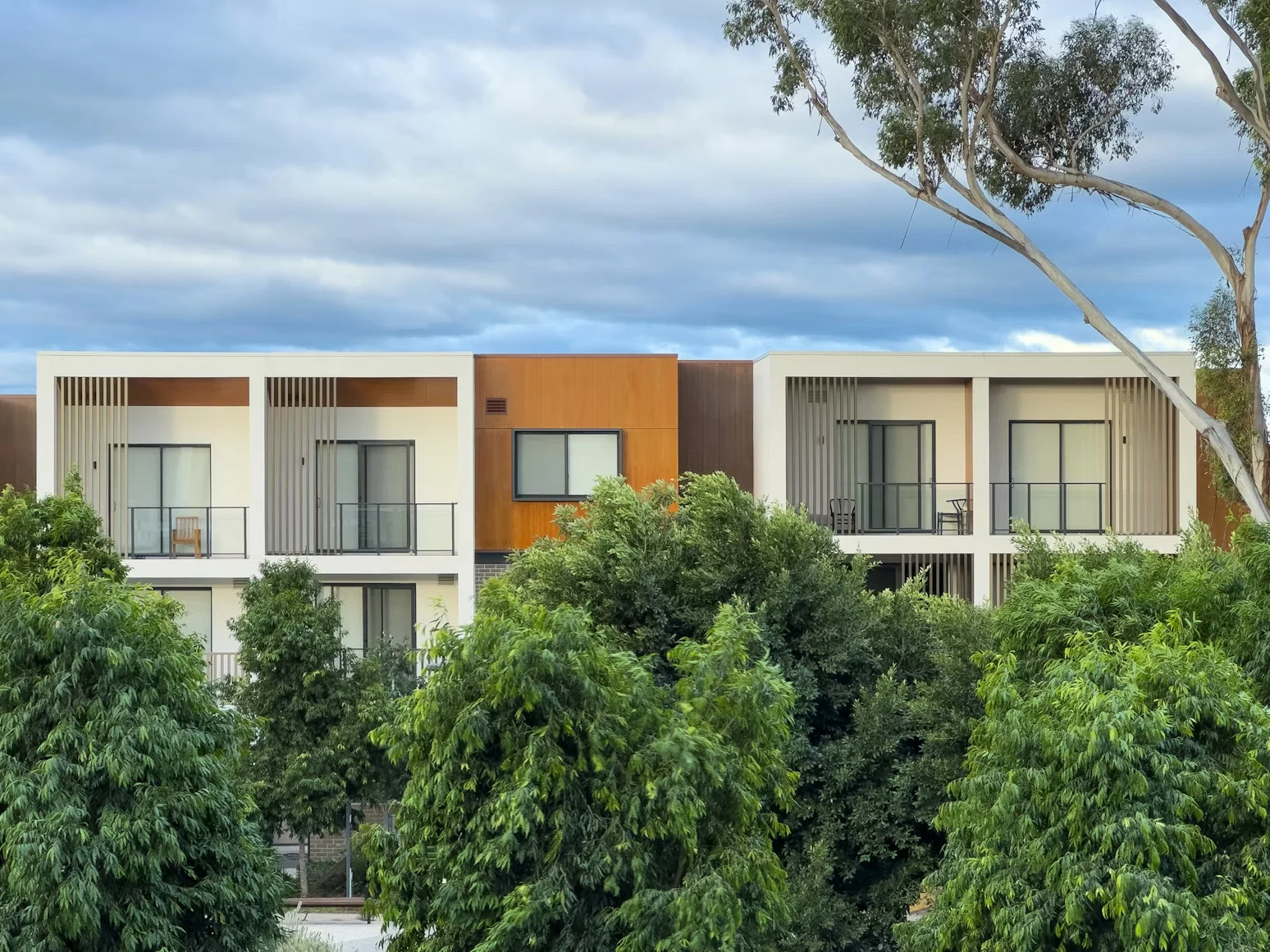
I want to describe a conversation I have had many times. A client is looking at two properties in the same estate: a 4-bedroom house and a 5-bedroom townhouse. Same developer. Same estate. Same tenant market. The townhouse is $20,000 cheaper. The house has more land. Both are new builds. She cannot work out which one makes more sense.
Neither can I, until we model it.
Some version of this conversation happens regularly. And the answer is not always the same. Sometimes the townhouse stacks up better. Sometimes the house does. What is always the same is what happens before anyone runs the numbers: an assumption.
The assumption usually sounds like this: ‘Townhouses just don’t perform as well, do they? I’d rather have a house.’ When I ask where that belief came from, there is usually a pause.
The truth is, most of us absorbed it somewhere in passing: from a family member who bought well in the eighties, from an article we half-read, from the general cultural understanding that land appreciates and buildings deteriorate. That principle is not wrong. It just needs to be tested, not assumed.
Most investors have never tested the townhouse assumption against the specific market they’re buying into. They’ve accepted it as given.
Where the Stigma Comes From, and Why It Made Sense
The belief that houses outperform townhouses has legitimate historical roots. In the 1980s and 1990s, a townhouse often meant a small apartment-adjacent dwelling with a body corporate, shared walls, a postage-stamp courtyard, and a meaningful gap in land content compared to a house on a 600 square metre block next door.
That house genuinely had more land. Land appreciates. The calculation was simple and it was often right.
There was also a tenant preference that was once real: families wanted houses. Yards. Space. Townhouses were for singles or couples. The stigma formed around something that was, at the time, based in fact.
The problem is that the market has shifted significantly. The stigma has not updated to reflect it.
What New Estates Have Actually Done to This Comparison
In today’s masterplanned greenfield estates: Melbourne’s outer western corridor, south-east Queensland’s growth areas, Western Sydney. Something important has changed. Land lots have become very small.
The typical house and land package is increasingly built on 200 to 300 square metres of land, sometimes less. The house fills the block. Side setbacks are at the legal minimum. The backyard, if it exists, is a narrow strip.
Directly across the laneway: a townhouse. Also built to boundary. Also on 100 to 150 square metres. Also with three to five bedrooms and a double garage. Built by the same developer. Subject to the same estate covenants. Served by the same infrastructure. Attractive to the same tenants.
The house is priced at $650,000. The townhouse is $580,000.
The question becomes: what does the extra $70,000 actually buy?
A land component that is still tiny. A slightly wider setback. The word ‘house’ on the contract. For a homeowner, these things may genuinely matter. For an investor, the calculation looks different.
We all hear that land appreciates. And generally speaking, that’s true. But when the house sits on a 220m2 block and the townhouse sits on 140m2, we need to ask a harder question: how much land difference are we actually talking about?
The Comparison That Does Not Get Made Often Enough
When investors compare townhouses to houses, they almost always compare them to the wrong thing. They are imagining a house on a generous established-suburb block. That is not the comparison on the table. The actual comparison is:townhouse in this estate versus house in this estate, at these prices, right now.
When you make that comparison honestly, four things are worth examining. The answers are not predetermined.
Yield: check the actual difference
In new estates where lot sizes have converged, the rent difference between a house and a townhouse can be smaller than expected. On a recent comparison, the house produced a gross yield of 4.36% and the townhouse 3.99%. The house was the better yield, not the townhouse. Lower purchase price does not automatically mean higher yield if the rent gap is also significant.
Depreciation: the improvement-to-land ratio matters
New builds attract full Division 43 (building allowance) and Division 40 (fixtures and fittings) depreciation from day one. A townhouse typically carries a higher improvement-to-land ratio than a house at a similar price, meaning the depreciation claim as a proportion of purchase price can be stronger. On a $140,000 salary at the 37% marginal rate, every extra dollar of depreciation is worth 37 cents in tax. Get a depreciation schedule for each property and include it in your model.
Weekly cashflow: model it, do not estimate it
This number accounts for interest, rent, depreciation, property management, and tax benefit together. It is almost always surprising when calculated properly. Some clients discover the property they assumed would be cheaper to hold is not. Some discover the reverse. The only way to know is to run the numbers for each specific property, at your specific income, with accurate rent figures.
Entry point: quantify what the price gap actually buys
If the townhouse is $20,000 cheaper than the house, that is real but modest. If it is $80,000 cheaper, that changes the deposit, stamp duty, and borrowing capacity meaningfully. The question is whether the price gap justifies accepting less land, lower long-term demand, or weaker growth prospects. Sometimes it does. That answer requires the actual numbers.
What the Numbers Show: A Real Example
I recently worked through this with a client in a new estate in Melbourne’s outer west. We were looking at a 4-bedroom house and a 5-bedroom townhouse. Same developer. Same estate. Same infrastructure.
Here is what the comparison showed.
| 4 Bed House | 5 Bed Townhouse | |
| Purchase price | $680,000 | $660,000 |
| Land size | 263 sqm | 212 sqm |
| Weekly rent (estimate) | ~$570 / week | ~$510 / week |
| Gross yield | 4.36% | 3.99% |
| Weekly holding cost | Similar | Similar |
| Long-term growth potential | Stronger | Moderate |
| Resale demand pool | Broader | More investor-driven |
The townhouse was $20,000 cheaper to buy. But the house had higher rent, better yield, more land, and broader long-term demand from both investors and owner-occupiers. When we modelled the full weekly holding cost, interest, depreciation, property management, and tax benefit, the house came out similar or slightly better.
She had assumed the townhouse would win on cashflow because it was cheaper to buy. It did not. And once the holding cost was essentially the same, the case for the townhouse rested almost entirely on the $20,000 entry advantage. On a long-term investment horizon, that does not outweigh the differences in land content, demand pool, and growth potential.
The house was the right call. Not because of the stigma. Because of the numbers.
That is the only reason that should ever settle the question.
She assumed the townhouse would win on cashflow because it was cheaper to buy. The numbers said otherwise. And once we had the numbers, the decision was straightforward.
Once you have a property in mind, a broker can model the actual cashflow for you, not an estimate, a real number. These are the people I send my clients to:
A mortgage broker can model the full weekly holding cost for any specific property you are considering. These are the people I send my clients to.
Irshad Hatami
Mortgage broker, Melbourne
Why Aimee works with them:
Irshad is meticulous. He does not just find a rate, he maps the full picture: serviceability, structure, what the bank actually looks at. My clients who go to him come back better informed about their own financial position than they were before the first appointment. That is rare.
Connect with Irshad on LinkedIn
Rielle Berglund — Matilda Tree Finance
Mortgage broker, Melbourne
Why Aimee works with them:
Rielle is exceptionally good with first-time buyers and people who feel intimidated by the finance process. She makes the complex feel manageable without dumbing it down. She explains everything, she is patient, and she genuinely celebrates her clients’ wins.
Instagram: @matildatreefinance
Dean Freda — Brokerage & Co
Mortgage broker, Melbourne (specialist in trades and self-employed)
Why Aimee works with them:
Dean works primarily with tradies and self-employed clients, people whose income structure makes standard broker conversations frustrating. He understands how that income is assessed and how to present it properly.
Instagram: @deanfreda_thetradiebroker
These are professionals I trust with my clients. If you choose to contact them, I may receive a referral fee if you proceed. That does not change what I tell you.
When the House Premium Is Justified
I want to be clear: I am not arguing that houses are the wrong choice. I am arguing that the assumption needs to be tested, not taken for granted.
A house genuinely is the better investment when:
The land component is substantially larger and in a suburb with real scarcity of established stock.
Tenant demand in the specific market demonstrably prefers standalone houses, with data to support it, not just a feeling.
You are purchasing as a potential future principal place of residence.
The townhouse carries an owners corporation fee high enough to meaningfully change the cashflow comparison.
The question is never “house or townhouse” as a category. It is always: what does this specific property offer, against what this specific price asks of me, in this specific market?
How to Think Through This for Your Own Decision
Make the real comparison
Not the townhouse versus a generous established-suburb house that is not available at this price point. Townhouse versus the actual house in the same estate, at the same time.
Run the numbers properly
Gross yield, net yield, weekly cashflow after interest, depreciation, property management, and tax benefit. Not estimates. Modelled numbers. If you have not done this, you are comparing feelings, not properties.
Quantify what the premium buys
If the house costs $70,000 more, ask: what specifically? Land content (how much more, exactly?), tenant appeal (how different, and is there data?), capital growth (based on what comparable evidence?). Make the premium earn its place in the analysis.
Check the owners corporation
If the townhouse has an OC, what are the annual levies? What does the Section 32 say? This is a real cost that belongs in your model.
Interrogate the stigma honestly
Is your preference for the house based on evidence about this specific market, or on a general belief you have held for years without ever testing it?
Sometimes the preference is not financial at all. Sometimes ‘I’d rather own a house’ is really another way of saying: ‘A house feels more successful.’ That is a perfectly human response. But it is worth knowing the difference between a feeling and a finding.
I have seen the numbers favour houses. I have seen them favour townhouses. What I have never seen is a client well-served by skipping the comparison.
In the example I described, the house won by almost every measure: yield, holding cost, land, growth potential, resale demand. The stigma was not irrational. It just needed numbers behind it instead of assumptions.
That is the standard to hold yourself to. Run the comparison. Accept what it tells you. Build from there.
Frequently Asked Questions
Do townhouses grow in value as much as houses?
It depends on the specific market. In greenfield estates where both house and townhouse lots are small, the growth drivers (infrastructure, population, rental demand) apply equally to both. The land component is too small in both cases to be the dominant factor. Always research the specific suburb rather than relying on a general rule.
Is there a body corporate on a Torrens title townhouse?
Not automatically. A Torrens title townhouse on its own lot does not require a body corporate by virtue of title type. However, if the estate has shared driveways or common property, an owners corporation may be registered separately. Always check the Section 32 Vendor’s Statement before signing. It is one of the most important documents in any off-the-plan purchase.
Will a family rent a townhouse in an outer suburb?
In high-growth outer suburban markets, consistently yes. Rental demand in areas like Melbourne’s western corridor is driven by young families who need space and proximity to employment, not a specific title type. A well-presented 5-bedroom townhouse with a double garage will attract the same family tenant pool as an equivalent house in the same estate. The practical liveability is nearly identical.
What is the Small Lot Housing Code Type B?
In Victoria, Type B of the Small Lot Housing Code (Victorian Planning Authority, 2019) governs the design of attached dwellings on small lots: setbacks, overlooking provisions, private open space requirements. If an estate’s plan of subdivision references Type B compliance, it means the townhouses must be built to specific design standards. This is a quality control measure, not a red flag.
How do I know if the townhouse has an owners corporation?
The Section 32 Vendor’s Statement is the definitive source. It must disclose any registered owners corporation, its annual fees, and any special levies. Your conveyancer should review this in detail before you exchange contracts. Do not rely on verbal confirmation from the agent or developer.
Is a Torrens title townhouse better than strata for investment?
Generally yes. Torrens title means you own your specific land and dwelling outright, with no shared ownership of common property and no mandatory body corporate. Both can work as investments, but Torrens title gives you more control and typically lower ongoing costs, provided there is no owners corporation registered separately, which is why checking the Section 32 is essential.
Related Articles
You might also find these helpful
Analysis Paralysis: When Doing the Work Becomes the Reason You Don’t Move — if the numbers are pointing one way and you still can’t commit, this one is for you.
Why Smart People Make Bad Property Decisions — the cognitive patterns that trip up capable investors, and how to recognise them in yourself.
Is Tarneit a Good Investment in 2026? — the Tarneit case study from the article, expanded into a full suburb analysis.
Off-the-Plan Investing: The Honest Guide — townhouses and house-and-land packages are often sold off-plan. Here is what to check before you sign.
Sources & references
The following sources are relevant to the content covered in this article.
Victorian Planning Authority. (2019). Small Lot Housing Code. State Government of Victoria.
Land Use Victoria. Plan of Subdivision PS902305Y — Grand Central Stage 19, Tarneit VIC 3029.
CoreLogic. (2026). Australian Property Market Data — Tarneit VIC 3029. corelogic.com.au
htag.com.au. (2026). Tarneit VIC 3029 Suburb Profile and Median Rent Data.
Bamboo Routes. (2026). Melbourne Property Price Forecasts 2026 — Wyndham Corridor. bambooroutes.com
Australian Taxation Office. (2025-26). Individual Income Tax Rates. ato.gov.au
Wyndham City Council. Planning Permit WYP14252/23. Grand Central Estate, Tarneit.
Disclaimer
This article contains general information only and does not constitute financial, legal or tax advice. Please speak to a licensed financial advisor, solicitor or mortgage broker about your specific circumstances. Aimee Templeman is a licensed real estate agent however approaches property through the lens of learning and empowerment. She has decades of experience coaching and advising everyday Australians and executive decision makers. Book a conversation with Aimee at Contact.