
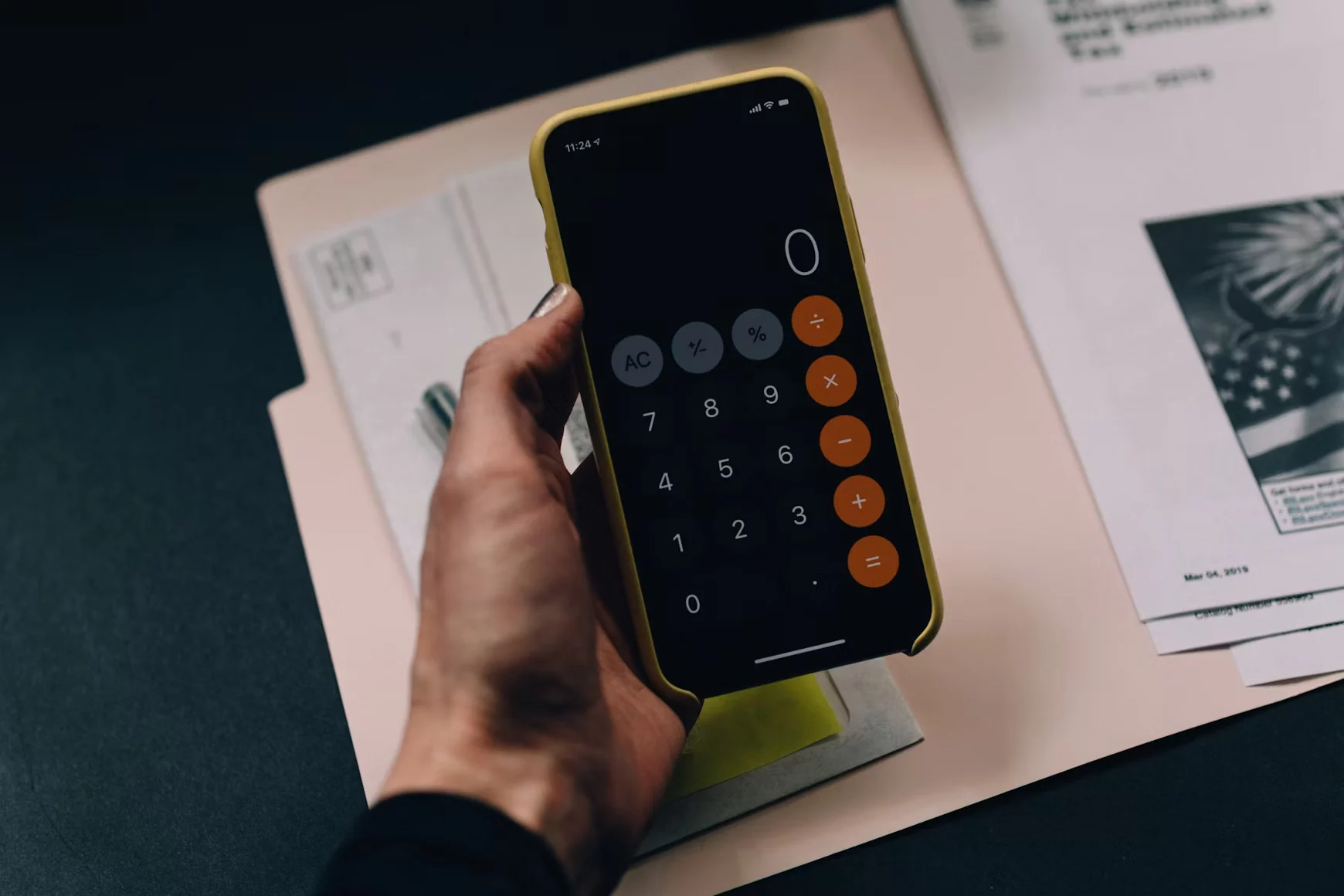
Nobody taught me what a budget was. I worked it out over years, through guessing, through pattern-matching and through a few decisions I’d rather have back.
And I say that as someone who has spent over two decades making high-stakes decisions for a living.
The first time I had a genuinely honest conversation about my own money, what was coming in, what was going out, and where the gap was, I was already well into my career. And it changed things. Not dramatically. Not overnight. But it changed the quality of the decisions I made from that point forward.
What follows is the conversation I wish someone had offered me at 22.
The thing nobody tells you
Somewhere between school and adulthood, everyone around you seems to have figured out the money stuff. They talk about savings goals and offset accounts and “putting a bit away each week” like it’s obvious. Like the instruction manual was handed to everyone else at a different meeting.
Research cited by UNSW Business School puts the number of functionally financially illiterate Australian adults at around 45 percent. That is not a minority. That is nearly half the country. And yet the cultural assumption is that managing money is self-evident, something you should just know.
You probably should have been taught this. The fact that you weren’t is not a character flaw. It is a gap in how we educate people, and a significant one.
So. Let’s fix it.
What is a budget, and why does it matter?
A budget is a decision about where your money goes before it arrives.
That is the whole thing. That is the complete definition.
Not a punishment. Not a restriction. Not a monthly performance review where you find out how badly you failed at self-control.
A budget is a plan you make in advance, so that your money does what you want it to do instead of disappearing in ways that leave you vaguely anxious by the 20th of every month.
“When you don’t have a budget, your money makes its own decisions.”
When you don’t have a budget, your money makes its own decisions. It goes to whoever asks for it first: the subscription you forgot to cancel three months ago, the grocery run that started at $80 and became $140 by the time you got to the checkout, the round of drinks you said yes to because you weren’t sure if you could afford it but said yes anyway.
When you have a budget, you make the decision in advance. And that single shift, from reactive to intentional, changes the way money feels.
Why restriction budgets don’t work
Most budgeting advice leads with what you shouldn’t be spending. The coffee. The takeaway. The streaming services you probably do not watch enough to justify. As if the problem is self-indulgence rather than the absence of any system at all.
That framing fails. Consistently. Not because people lack discipline, but because guilt is not a system.
Here is a more useful way to think about it: a budget is not about cutting back. It is about getting intentional. The person who spends $150 on dinners out knowing they have already saved $400 for the month is in a better financial position, psychologically and practically, than the person who spends $90 on impulse and feels terrible about both purchases.
The goal is not to spend less on things you enjoy. The goal is to spend deliberately, save with purpose and stop carrying the low-level anxiety that comes from never quite knowing where you stand.
What a budget does for you
Three things, specifically.
First: it tells you what is actually happening. Most people do not know what they spend in a given month. Not an estimate, they genuinely do not know. Australia’s household savings rate was 6.2% of disposable income in the March 2026 quarter, according to the Australian Bureau of Statistics. That means the average Australian household is keeping about six cents of every dollar. If that surprises you, it should.
Second: it gives you permission to spend on the things that matter. When you know your number, what is allocated to rent, bills, savings, and everything else, spending what is left stops carrying guilt. You made the decision already. Spend without the running commentary.
Third: it makes your deposit goal visible. Instead of an abstract future aspiration, a budget lets you calculate something real: at my current income and savings rate, my deposit timeline is approximately this long. When you can see the timeline, you can work with it, or change it.
Where to start (and what to use)
You do not need a spreadsheet. You do not need a colour-coded system built from scratch on a Sunday afternoon. Here is what works in Australia right now:
Frollo
Best overall for Australians — free tier available
Built specifically for the Australian market. Connects to over 150 financial institutions through Open Banking, pulls every transaction from every account automatically, and categorises your spending without you touching it. Spend thirty seconds looking at the dashboard and you know what you’ve actually been doing for the past month. Free tier; full features for approximately $9.99 a month.
Pocketbook
Best free option for beginners
Clean, simple, free. Good bank connectivity and automatic categorisation. If you have never paid attention to your spending before, Pocketbook is the lowest-friction place to start. It shows you where the money went without asking you to commit to a whole system.
Up Bank
Best if you want banking and budgeting in one app
Up is a digital bank with outstanding in-built savings tools. You can set up multiple separate Savers — one for your house deposit, one for an emergency fund, one for annual bills — and automate transfers the moment your pay arrives. The money moves before you see it in your transaction account. That is, genuinely, the most effective single savings habit for most people.
YNAB (You Need a Budget)
Best for people who want a real system and will commit to it
Paid, around $17 to $18 a month, and worth it if you’re prepared to use it. Works on one principle: every dollar gets a job before the month starts. If you have tried budgeting before and given up by week three, YNAB often fixes the thing that was actually broken. Requires commitment. Repays that commitment.
The deposit connection
Once you know what is happening with your money, you can calculate the number that matters most: how much can I genuinely save each month, right now, without misery?
Not the aspirational version. The real, honest version.
That number, multiplied out, becomes your deposit timeline. The national median dwelling value was $922,838 as at February 2026, according to Cotality data. A 20% deposit on the national median is approximately $184,000. On a more modest first purchase, a unit, a townhouse, a property outside the capital cities, the number is considerably lower.
If you are a first home buyer, the First Home Guarantee now allows purchases with a 5% deposit and no lender’s mortgage insurance, with no caps on places and no income thresholds as of October 2025. The timeline at 5% is a very different conversation to the timeline at 20%.
You might also look at the First Home Super Saver scheme: contribute up to $15,000 a year in voluntary super, withdraw up to $50,000 plus earnings at concessional tax rates toward your deposit. For people on higher incomes, the tax saving is material.
| Savings per month | Per year | Deposit (5% target) | Approx. timeframe |
| $300 | $3,600 | $46,000 (on $922k median) | 13 years |
| $500 | $6,000 | $46,000 (on $922k median) | 8 years |
| $800 | $9,600 | $46,000 (on $922k median) | 5 years |
| $1,200 | $14,400 | $46,000 (on $922k median) | 3 years |
Note: This table assumes a 5% deposit target on the national median. Your actual figure will differ based on purchase price and your state or territory. Speak to a broker for your specific numbers.
But none of these conversations can happen until you know your actual savings capacity. And you will not know your savings capacity until you know where your money is currently going.
That is what a budget is for.
The part nobody says out loud
The people who build wealth over time are not always the highest earners. They are the ones who knew their number, stayed close to it, and understood that a budget is not about austerity. It is about direction.
You were not taught this. That matters, but it does not disqualify you. Knowing what a budget actually is, and deciding to use one, is where every good financial decision starts.
If you’re ready to work out what your number looks like and what a realistic deposit timeline means for your life, that is exactly the kind of conversation I have at the start of every coaching relationship.
Ready to work out what your number looks like?
Knowing what a budget is puts you ahead of more people than you’d expect. The next step is knowing your specific number: what can you realistically save each month, and what does that mean for a deposit timeline in your market?
That is exactly the conversation I have at the start of every coaching relationship. No pitch. No pressure. Just an honest look at where you are and what is actually possible.
If you are ready to purchase when we’re done, your coaching investment is reimbursed. If you’re not ready, that’s completely fine too. Nobody here is pushing.
Start the conversation at Contact.
Related reading
The Budget That Actually Works When You’re Just Starting Out — the practical follow-up: the three-bucket method and the deposit-saving system that doesn’t collapse by week three.
Why Property, and Why Young? The Real Reason It Matters More Than Most People Realise — the compounding argument told through human outcomes, not maths.
Is Property Investment Still Worth It in 2026? — the evidence-based answer to the question most first-time buyers are privately wondering.
Sources & references
The following sources are relevant to the content covered in this article.
Australian Bureau of Statistics. Australian National Accounts: National Income, Expenditure and Product, March quarter 2026. June 2026.
Cotality (formerly CoreLogic). National dwelling values, February 2026. Cited via yourmortgage.com.au
UNSW Business School. “Australia’s financial literacy crisis: Causes and solutions.”
Money.com.au. “Average first home deposit amount in Australia.” Accessed June 2026.
Australian Taxation Office. First Home Super Saver Scheme.
National Housing Finance and Investment Corporation. First Home Guarantee: updated for 2026 proposed changes. nhfic.gov.au (via felixfinance.com.au)
Disclaimer
This article contains general information only and does not constitute financial, legal or tax advice. Please speak to a licensed financial advisor, solicitor or mortgage broker about your specific circumstances. Aimee Templeman is a licensed real estate agent however approaches property through the lens of learning and empowerment. She has decades of experience coaching and advising everyday Australians and executive decision makers. Book a conversation with Aimee at Contact.