

Before we go any further, I want to be upfront about something important. I am not a financial advisor. I am a property coach. The ideas in this article—good debt, bad debt, tax deductibility, depreciation—are well-established financial concepts, not my personal inventions.
How they apply to your specific income, tax position, and life circumstances requires a conversation with a licensed financial adviser and ideally a good accountant. What I can do is give you the framework so that conversation is more informed.
Right. Now that’s said—let’s talk about something most people in their twenties have never been told clearly.
The Short Version
Most young Australians are handed a single piece of property advice: save a deposit, buy a home, get on the ladder. It sounds sensible. It has worked for generations. And for many people, it remains the right choice.
But for some people in their mid-twenties — particularly those on reasonable incomes who are renting in a lifestyle location they love — buying an investment property first may actually be the smarter financial move. Not because homeownership is bad. Because understanding the difference between debt that works for you and debt that costs you is fundamental to any financial decision, and that distinction changes the calculation significantly.
This article argues both sides. Genuinely. Because the right answer depends entirely on who you are.
Good Debt and Bad Debt: What They Mean
Bad debt is debt used to buy something that loses value or produces no return. A car loan. A credit card balance. A buy-now-pay-later purchase. The debt costs you interest, and the asset — if you can call it that — goes down in value or disappears entirely. You are poorer for having taken it.
Good debt is debt used to acquire an asset that generates income, grows in value, or both. An investment property loan is the classic example. The interest may be tax-deductible. The asset produces rental income. Over time, it appreciates. The debt is still real — you still owe the bank money and pay interest — but the asset is working alongside you.
The middle ground
A mortgage on your own home sits in a more complicated middle ground. You build equity over time and eliminate your rent cost — both genuine benefits. But the interest is not tax-deductible, the property produces no income, and whether it appreciates enough to justify the cost depends on where and when you buy. It is “good debt” in the sense that the asset tends to hold and grow in value. It is not “good debt” in the investment sense of generating tax-deductible income.
This distinction — debt that the tax system rewards versus debt it ignores — is one of the things that makes investment property structurally different from buying a home to live in. It does not make investment property automatically better. It makes it worth understanding clearly before you decide.
The Case For Buying Your Home First
The conventional path has real merit. I want to be clear about that before I push back on it.
Buying your own home eliminates rent as an ongoing cost. Over 10-20 years, the money you would have paid in rent instead builds equity in an asset you own. There is genuine financial logic to this that compounds over time.
Psychologically, homeownership provides stability that renting does not. You cannot be moved on by a landlord. You can renovate, repaint, keep a dog, plant a garden. For people who are ready to settle in a location, the non-financial benefits of ownership are real and worth weighing.
First home buyers also have access to government incentives that investors do not: the First Home Guarantee (allowing eligible buyers to purchase with as little as a 5% deposit without paying LMI), various state-based stamp duty concessions, and the First Home Super Saver Scheme for some buyers. These are not trivial. They represent real dollar value that an investor buying a first property does not receive.
And buying your home means you own somewhere to live. That clarity — I own this, it is mine — has genuine value for a lot of people that does not show up in a spreadsheet.
The case for buying your home first is: stability, rent elimination, government incentives and psychological grounding. For the right person in the right stage of life, it is the correct choice.
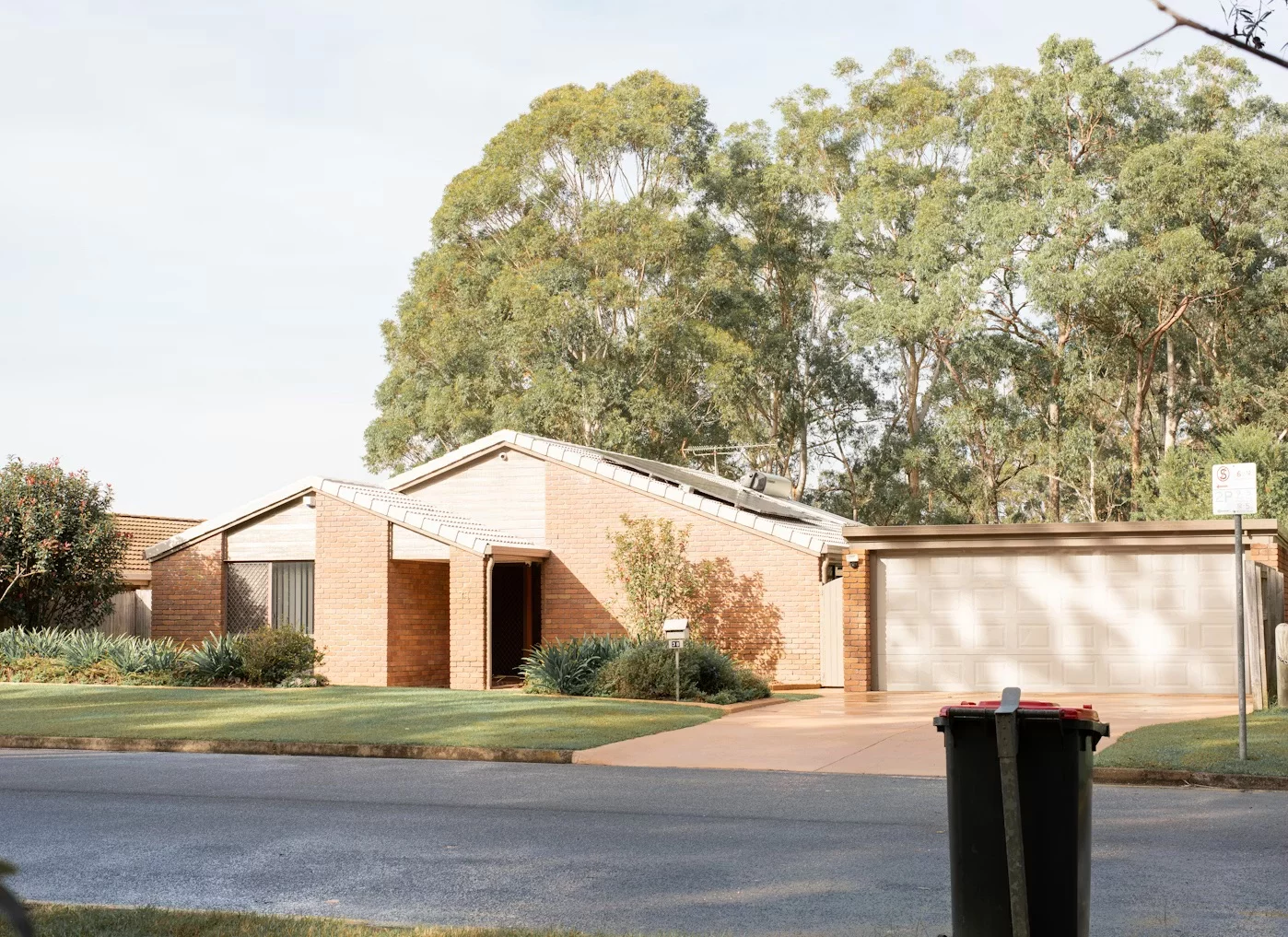
A property in Australia.
The Case For Investing First
Here is the part of the conversation that most people in their twenties have not had.
When you borrow money to buy an investment property, the interest on that loan may be tax-deductible — meaning you can offset it against your income and reduce your tax bill. When you borrow to buy your own home, the interest is not deductible. The Australian tax system does not reward you for eliminating your own rent; it does reward you for providing rental accommodation to someone else.
For someone on a reasonable income in their mid-twenties — say, $80,000-$120,000 a year — this matters. The marginal tax rate at that income level means deductible interest is worth real money every financial year.
An investment property also produces rental income. That income helps service the loan. Your own home does not. You pay the entire mortgage from your own after-tax salary, unassisted.
The investment-first argument also addresses a practical reality: many young Australians want to live in inner-city suburbs, coastal areas, or lifestyle locations that are well beyond their purchasing budget. Rentvesting lets them rent where they want to live while buying where the numbers work — a suburb further out, a regional city with strong fundamentals, a new development with good yield and depreciation. You do not have to choose between your lifestyle and your investment.
The case for investing first is: tax deductibility, rental income offset, access to depreciation benefits, the ability to buy in a market that suits your strategy rather than your lifestyle, and the ability to stay mobile during a decade of your life when flexibility has genuine value.
What Is Rentvesting?
Rentvesting is the strategy of renting the property you want to live in while purchasing an investment property in a location where the financial case is strong.
In practice, it looks like this: you rent an apartment in Fitzroy or South Yarra or Bondi — wherever your life is — and you own a townhouse in Geelong or Werribee or a Norlane new build that you would never want to live in but that delivers 5% gross yield and strong depreciation. The rent you pay for your lifestyle property is partially offset by the rental income from your investment. The tax deductions on your investment reduce your tax bill. The depreciation on a new build reduces it further.
Rentvesting has real trade-offs. You do not get the psychological stability of owning where you live. You are still subject to lease renewals and landlord decisions on your own home. And if you are renting in an expensive area, the rent cost can be significant. Whether the financial benefits of the investment structure outweigh the lifestyle costs of renting indefinitely is a genuinely personal calculation.
But for people who are not ready to settle, who want to stay close to opportunity and connection in expensive cities, rentvesting is not a compromise. It is a strategy.
Why New Builds Change the Calculation
If you are considering investment property in your twenties, the case for new builds is worth understanding specifically.
New builds attract significantly higher depreciation deductions than older properties. Under the Australian tax system, investors in new residential properties can claim two categories of depreciation:
Division 43 — Capital Works: The building itself depreciates at 2.5% of its construction cost per year. On a new build where the construction cost is, say, $300,000, that is $7,500 per year in deductions — for 40 years from the date of construction.
Division 40 — Plant and Equipment: Fixtures and fittings (appliances, carpet, blinds, hot water systems) depreciate at accelerated rates in the early years. On a brand new property with all-new fittings, these deductions can be substantial in years one through five.
For an older property purchased on the resale market, a buyer who was not the original owner has had plant and equipment deductions removed since 2017 legislative changes — meaning the depreciation advantage of new builds over established investment properties is now particularly significant.
Government housing policy has also consistently supported new build investment as a mechanism to increase housing supply. Settlement periods on off-the-plan new builds — which can be 12 to 18 months from contract to handover — give buyers time to save further, organise finance formally, and benefit from any market movement in the interim. For a young buyer with a 10% deposit today, an off-the-plan contract with a Q3 2027 settlement gives them a structured savings runway without being locked out of the market entirely.
The new build advantage is not infinite. The depreciation premium is highest in years one to five and diminishes over time. And new builds in some locations carry their own risks — construction delays, developer quality, and the fact that buying off the plan means you have not inspected a finished product. These are real considerations that a financial adviser and conveyancer should walk you through before you sign.
The Numbers Side by Side
Let’s put two versions of the same 25-year-old next to each other. Both earn $95,000 a year. Both have $50,000 saved. Both are renting in a suburb they love at $450 per week.
| Sam — Buys Home First | Jordan — Buys Investment First | |
| Purchase | $500,000 home to live in | $500,000 new build investment |
| Deposit | $50,000 (10%) + LMI | $50,000 (10%) + LMI |
| Loan | ~$465,000 @ 6.2% | ~$465,000 @ 6.2% |
| Monthly repayment (approx) | ~$2,850/month | ~$2,850/month |
| Rental income | Nil | ~$430/week (~$1,865/month) |
| Ongoing rent cost | Nil (lives in property) | ~$450/week (~$1,950/month) |
| Interest deductibility | No | Yes — reduces taxable income |
| Depreciation (new build Yr 1) | No | ~$8,000-$12,000 (approx) |
| Estimated tax saving (Yr 1) | Nil | ~$3,200-$4,800 depending on position |
| Net monthly cash position (approx) | Mortgage only from salary | Rent in + tax saving helps offset rent out + loan |
The homeownership case also has genuine merit. Government incentives, psychological stability, rent elimination, and the simplicity of owning where you live — these are real benefits too. For someone who is ready to commit to a suburb and a life stage, buying your home first is often the right answer.
What I would push back on is the idea that the home-first path is obviously correct and the investment-first path is somehow reckless. For some people in their twenties, it is the other way around. And the only way to know which applies to you is to understand both structures clearly — which is why this conversation matters.
Before you decide which path is right for you, ask yourself three questions:
- Am I buying this because it fits my strategy, or because it’s what I’m supposed to do?
- Do I understand the financial structure of both options well enough to make a real comparison?
- Have I spoken to a financial adviser and accountant — not just a mortgage broker — about which approach suits my income, tax position, and goals?
If you can answer all three clearly, you are in a position to make an informed decision. If any of them give you pause, that’s where the real conversation needs to start—and that is exactly what The Continuum Pathway is here for.
Frequently Asked Questions
What is the difference between good debt and bad debt?
Bad debt is debt used to buy something that loses value or produces no financial return — car loans, credit card balances, personal loans for consumption. Good debt is debt used to acquire an income-producing or appreciating asset — such as an investment property loan, where interest may be tax-deductible and the asset generates rental income. A home loan sits in between: you build equity and eliminate rent, but the interest is not tax-deductible and the asset produces no income.
Should I buy a home or investment property first?
Both approaches have genuine merit. Buying your home first offers psychological stability, rent elimination, and access to first home buyer government incentives. Buying an investment property first (rentvesting) offers tax-deductible interest, rental income, and the ability to invest where the financial case is strongest rather than where you want to live. The right answer depends on your income, tax position, lifestyle, and how ready you are to settle in a location. A financial adviser and accountant can help you model which structure suits your specific situation.
What is rentvesting and is it a good idea?
Rentvesting is the strategy of renting where you want to live while purchasing an investment property where the numbers make sense — often a more affordable suburb or a regional market with strong yield. For people who want to stay in expensive lifestyle locations while building property wealth, it can be a highly effective approach. It trades the stability of homeownership for the financial advantages of investment property structure. Whether it is a good idea depends on your rent cost, investment returns, tax position, and lifestyle priorities.
Why are new builds better for investment property?
New builds attract higher depreciation deductions than older properties. Investors can claim division 43 capital works deductions (typically 2.5% of construction cost per year) and division 40 plant and equipment deductions on new fittings. Since 2017, buyers of second-hand properties can no longer claim plant and equipment depreciation on previously-used assets, making the new build depreciation advantage particularly significant. Off-the-plan contracts also provide time to organise finance formally and potentially save additional deposit before settlement.
Do I need a financial adviser to buy an investment property?
You are not legally required to see a financial adviser before purchasing an investment property, but it is strongly recommended. The tax implications of investment property — deductibility, depreciation, capital gains tax, land tax — are significant and individual. A licensed financial adviser and accountant who understands your full financial picture can model whether investment property first genuinely suits your situation. A mortgage broker can advise on loan structure. A conveyancer handles the legal side. Property coaching — which is what The Continuum Pathway provides — helps you understand the strategy and ask the right questions of each of those advisers.
Related Articles
LMI: Don’t Panic, It Isn’t That Big a Deal
What Is a Budget? The Honest Explanation Nobody Gave You
What Is a Mortgage Broker—and Why Even Bother?
The Budget That Actually Works When You’re Just Starting Out
Sources & references
The following sources are relevant to the content covered in this article.
Australian Taxation Office — Rental Properties Guide
Australian Taxation Office — Depreciation of Rental Property
Australian Taxation Office — Capital Works Deductions
Housing Australia — First Home Guarantee
Australian Bureau of Statistics — Housing Occupancy and Costs 2021
Reserve Bank of Australia — Housing in Australia
Disclaimer
This article contains general information only and does not constitute financial, legal or tax advice. Please speak to a licensed financial advisor, solicitor or mortgage broker about your specific circumstances. Aimee Templeman is a licensed real estate agent however approaches property through the lens of learning and empowerment. She has decades of experience coaching and advising everyday Australians and executive decision makers. Book a conversation with Aimee at Contact.