
In October 2016, Ford Australia closed its Geelong manufacturing plant. Six hundred direct jobs, and a supplier network that supported thousands more, disappeared. The closure ended more than a century of Ford’s manufacturing presence in Australia. Geelong had been a car city in a way that was identity-deep — not just jobs, but culture, community, and a sense of what the city was for.
The commentators who wrote about Geelong’s future after Ford were cautious. Some were pessimistic. The language of “hollowing out,” “population exodus,” and “economic decline” appeared in serious publications.
They were wrong.
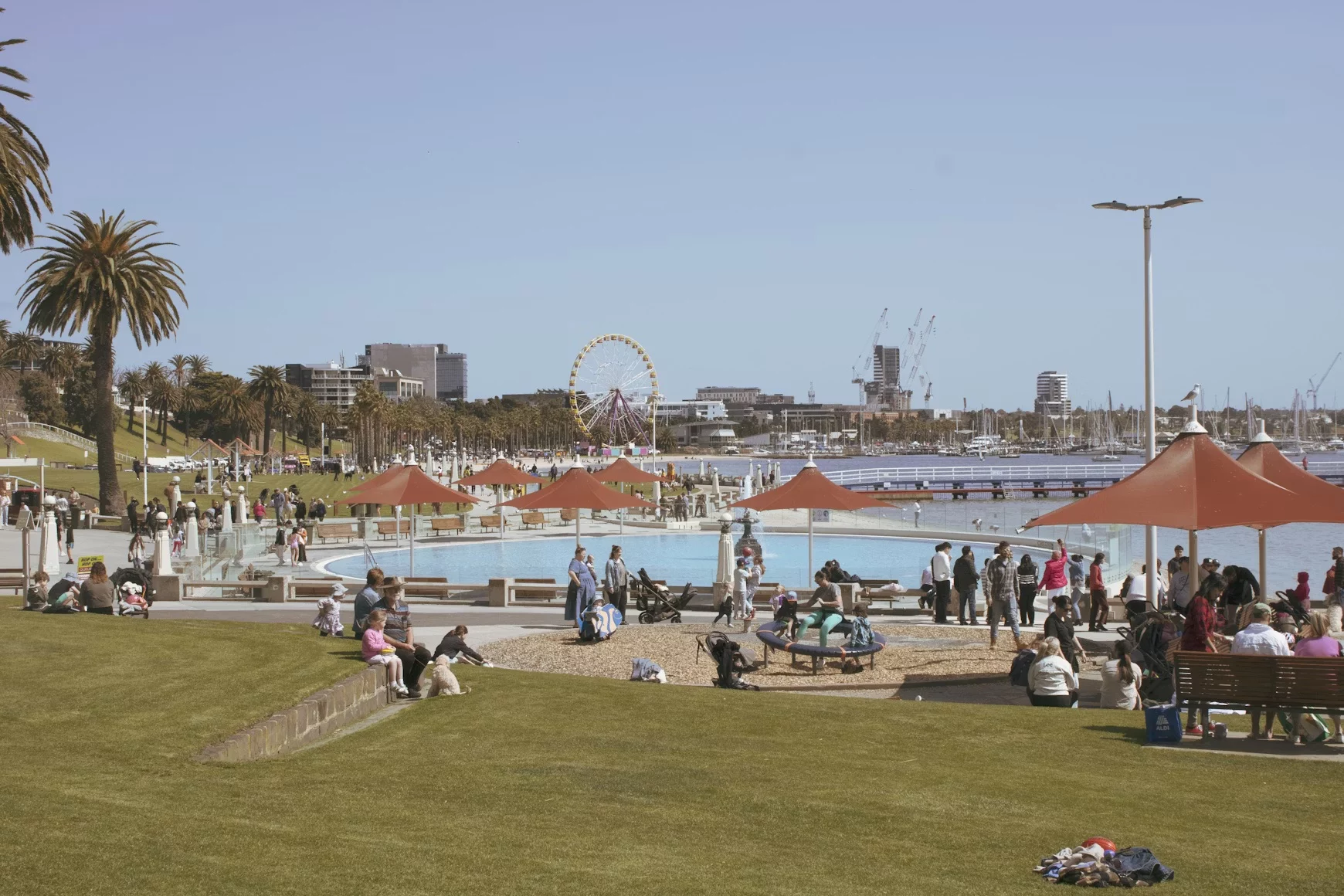
Not immediately — the transition was genuinely hard. But in the decade that followed, Geelong did what resilient regional cities do: it found other reasons to exist. Healthcare. Education. Tourism. Remote work. Professional services. Logistics. And increasingly, it found a new identity as one of Australia’s most genuinely liveable regional cities.
By 2026, Geelong is not a city recovering from Ford. It is a city that has moved on from that story. It is arguably Victoria’s most actively discussed regional property market, with a population projected to grow 63% over the next 15 years and a property market that is genuinely tight on supply against rising demand.
This article covers what the data actually shows — and what the right investment questions are.
The Short Version
Greater Geelong City encompasses approximately 56 suburbs. The LGA-wide average median house price is approximately $728,000, ranging from approximately $555,000 in more affordable outer areas to over $1.2 million in premium inner and coastal suburbs. The Geelong suburb itself (VIC 3220) has a median of approximately $883,000.
Rental vacancy sits below 1.9% across the region. Property listings have tightened significantly — houses down 8%, units down 16.6% over the year to September 2025. This supply compression against sustained demand is the current market dynamic.
Gross rental yields average approximately 3.5% for houses and 4.26% for units at LGA level, with some outer and emerging suburbs delivering above 5%. These figures sit above Melbourne’s metro average.
Geelong’s population of approximately 190,000 is projected to grow 63% over the next 15 years. The Geelong Fast Rail project, once delivered, would reduce CBD-to-Melbourne travel time to approximately 50 minutes. Armstrong Creek is the primary active growth corridor. Key established investment suburbs include Belmont, Highton, Grovedale, North Geelong, and Lara.
The investment case in Geelong is real. The critical question is not whether Geelong is worth considering — it is which suburb, what property type, and what you are buying it to achieve.
After Ford: The City That Refused to Hollow Out
The Ford closure is the starting point for any honest Geelong analysis, because it defines what the city had to overcome and what it has actually become.
In the years following 2016, Geelong invested deliberately in economic diversification. Deakin University, already a significant employer, expanded its footprint. The healthcare sector — anchored by University Hospital Geelong and Barwon Health — grew substantially and continues to be one of the largest employment sectors in the region. The Waurn Ponds corridor became a hub for professional and research employment. The waterfront precinct was redeveloped. Tourism grew. Remote-work migration from Melbourne accelerated during and after the COVID period.
By any measurable indicator, Geelong’s economy is more diversified in 2026 than it was in 2016. That is not a marketing line — it is reflected in employment data, population figures, and investment decisions being made by state and federal governments.
The story matters for property investors because property values are underpinned by the strength and diversity of local economies. A city with one major employer is vulnerable. A city with layered employment across health, education, logistics, professional services, and tourism is not.
Geelong has the latter. That is why the property market has held up — and why it is attracting serious investor attention in 2026.
Understanding What the Numbers Mean
What does “property listings falling” tell investors?
When the number of properties listed for sale falls, it means sellers are not coming to market at the same rate as buyers. This creates supply compression: fewer choices for buyers, more competition for each property, and upward price pressure over time.
Geelong’s house listings fell 8% and unit listings fell 16.6% in the year to September 2025. These are significant moves. They tell you that the market is tightening from the supply side — not just that demand is increasing. When supply falls and demand holds or grows, prices typically follow upward.
What is the Geelong Fast Rail and why does it matter for property?
The Geelong Fast Rail project proposes to upgrade rail infrastructure between Geelong and Melbourne CBD, reducing travel time from approximately 70-80 minutes to approximately 50 minutes. Faster rail changes where people can live relative to where they work.
Rail time improvements have a documented effect on residential property values: the areas that become more commuter-accessible experience demand uplift as Melbourne workers expand their effective search radius. For Geelong, a reliable 50-minute connection to Melbourne would make it an attractive primary residence for Melbourne CBD workers — not just a tree-change destination.
Note: The Geelong Fast Rail project is at planning and funding stage. Confirmed delivery dates are not established. Investors should treat this as a significant but uncertain long-horizon upside driver.
Investment Snapshot — Early 2026
| Metric | Greater Geelong LGA | Selected Suburbs | Greater Melbourne |
| Median House Price (LGA avg) | ~$728,000 | $555K-$1.2M+ (range) | ~$880,000 |
| Geelong suburb (3220) | ~$883,000 | premium inner suburb | — |
| 12-Month Price Growth | modest / stabilising | varies by suburb | approx. +2% |
| Gross Yield — Houses (LGA avg) | ~3.5% | 4-5%+ in outer suburbs | ~3.4% |
| Gross Yield — Units (LGA avg) | ~4.26% | varies | ~3.9% |
| Rental Vacancy Rate | <1.9% | tight across LGA | ~1.8% metro |
| Property Listings Change | houses -8%, units -16.6% | (year to Sep 2025) | — |
| Population (2026) | ~190,000 | growing | — |
| 15-Year Population Growth Projection | +63% | across Greater Geelong | — |
| Distance to Melbourne CBD | ~75km/ 70-80 min train | varies | — |
Source: Picki, BuyerAgentFinder, Loan Market Geelong City, OpenAgent, SQM Research, ABS. Early 2026. Figures are indicative medians across available data sources.
The Suburb Question — Which Part of Geelong?
Greater Geelong’s 56 suburbs are not a uniform market. Buying in the Geelong suburb proper (3220) is a materially different proposition from buying in Lara, Armstrong Creek, North Geelong, or Belmont. Investors need to know which story they are buying into.
Here is a practical breakdown of the key investment areas.
Armstrong Creek is the most active growth corridor in Greater Geelong, located south of the established suburbs and designated as a dedicated urban growth area. It has committed infrastructure, new schools, and a development pipeline that makes it comparable to Melbourne’s western growth corridors. It offers lower entry prices with higher growth potential — but also the supply pressure that comes with active land release.
Belmont and Highton are established inner suburbs with strong school zones, genuine community character, and demand from families and professionals. These suburbs offer the “established suburb premium” — lower yield relative to price, but stronger capital growth history and a more stable buyer pool.
Grovedale and Waurn Ponds sit in the southern growth corridor and benefit from proximity to Deakin University and the expanding professional services and research employment in that corridor. These suburbs attract a tenant pool that includes university staff, healthcare workers, and professionals — a stable demographic.
North Geelong appeals to investors seeking affordability with good infrastructure access. It is close to the CBD, has traditionally lower entry prices, and is seeing gentrification pressure as inner Geelong prices have risen.
Lara is a commuter suburb on the Melbourne side of Geelong — close enough to benefit from Geelong’s growth story while also appealing to buyers who work in Melbourne. Lower prices, land component, and strong commuter appeal.
The right suburb depends on what you are trying to achieve: yield, capital growth, tenant type, holding period, and budget. Geelong is not one market — it is a collection of distinctly different opportunities within one LGA.
To make that practical: if you had $700,000 and wanted capital growth, the starting point would be Belmont or Highton — established school zones, genuine owner-occupier demand, and a track record of holding value through cycles. If you had the same budget and wanted yield above 4.5%, the conversation shifts to outer suburbs and units in North Geelong or Grovedale, where entry prices are lower and rents remain competitive. Armstrong Creek sits in between — growth potential with a new-estate supply caveat. None of those answers is universally right. They depend on your borrowing position, your timeline, and what you need the investment to do.
What the Housing Market Is Doing
Geelong’s property market corrected modestly from its COVID-era highs, much like most Australian markets. In 2026, the market is in stabilisation and early recovery across most suburbs, with the supply story being the most telling current indicator.
House listings falling 8% and unit listings falling 16.6% in a single year is a significant compression. When sellers are not coming to market, buyers have fewer options. When buyers have fewer options, they compete more aggressively for what is available. That dynamic supports prices — not immediately and dramatically, but consistently and over time.
The market that Geelong observers are watching closely is whether the supply compression translates into price growth through the second half of 2026 and into 2027. The supply signal is pointing in that direction. The broader environment — interest rate trajectory, Melbourne employment, remote work trends — will determine the magnitude.
For investors, the relevant insight is timing: buying into supply compression before prices have fully repriced is generally better than buying after. Geelong’s supply data is pointing toward a tightening market, and buyer activity is reported to be rising.
The Rental Market
Rental vacancy below 1.9% is the most consistently positive signal in Geelong’s current data. A tight rental market means tenants are competing for properties rather than the reverse — which supports rental income, limits vacancy risk, and gives landlords reasonable confidence in tenancy continuity.
Gross yields averaging approximately 3.5% for houses across the LGA are modest at the top end of the market (inner Geelong), but climb meaningfully in outer and emerging areas. Some suburbs, particularly those in the outer growth corridors or with strong university proximity, are delivering yields above 5% on the right properties.
The tenant pool in Geelong is genuinely diverse: university students and staff at Deakin, healthcare workers at University Hospital and Barwon Health, government employees, logistics workers in the Waurn Ponds corridor, and Melbourne commuters seeking affordability. That diversity of tenant demand is a stabilising force — no single employment sector drives the entire rental market, so disruption to any one sector does not cascade across the entire rental pool.
Rents have been growing modestly, consistent with the tight vacancy environment. The supply of new rental properties has not kept pace with population growth and new household formation — a dynamic that should continue to support rents over the medium term.
The Economy and Employment
Understanding Geelong’s employment base in 2026 requires consciously setting aside the Ford narrative. The city’s employment picture has been rebuilt around different foundations.
Healthcare and social assistance is the largest employment sector, anchored by University Hospital Geelong, Barwon Health, St John of God Geelong Hospital, and an expanding network of community and aged care services. Healthcare employment is largely recession-resistant and tends to grow with population.
Education is the second anchor, with Deakin University a significant employer across the Waurn Ponds and waterfront campuses. Higher education creates both direct employment and a flow of graduates who increasingly remain in the region as opportunities grow.
Professional services, logistics, and public administration round out a base that is now genuinely multi-sector. The Waurn Ponds employment corridor has attracted a range of professional and research-based businesses that would not have been here a decade ago.
Tourism and hospitality remain important, particularly along the Great Ocean Road corridor and the bay waterfront. These sectors add economic texture but are not the primary investment driver.
The critical employment story for property investors is this: Geelong’s jobs are now coming from sectors that produce long-term residents — not fly-in-fly-out workers, not seasonal tourism employees, but healthcare professionals, university staff, and logistics workers who buy or rent homes, enrol children in schools, and build lives. That is the employment profile that supports property demand.
The Infrastructure Story
Three infrastructure investments define Geelong’s medium-to-long-term outlook.
The Geelong Fast Rail project is the most significant transport upgrade in the region’s history. When delivered, it would reduce Melbourne CBD travel time to approximately 50 minutes. Faster rail does not just help existing Geelong residents commute — it expands the effective commuter catchment for Melbourne workers, increasing demand for Geelong residential property from people who currently consider the commute prohibitive. This is the project that, if and when delivered, has the greatest potential to reprice the market.
The Nyaal Banyul Geelong Convention and Event Centre — currently under development as part of the waterfront precinct — is a significant investment in business tourism and events infrastructure. Convention centres attract economic activity that is broadly distributed across the local economy. The waterfront redevelopment associated with this project improves liveability in ways that support the residential market.
The University Hospital Geelong precinct expansion is both a healthcare infrastructure investment and a long-term employment driver. Healthcare jobs are stable, grow with population, and attract professionals who typically seek owner-occupier housing rather than transient rental accommodation.
Armstrong Creek’s dedicated infrastructure — schools, roads, services — continues to be built out as the growth corridor matures. This suburb-specific investment is what makes Armstrong Creek the most active new-land opportunity in the Greater Geelong market.
Pros, Cons and Who This Suits
| What Works ForGeelong | What Gives Pause |
| Population growth projected at +63% over 15 years | LGA has 56 suburbs — suburb selectionis critical |
| Rental vacancy <1.9% — tight supply supports income | Geelong Fast Rail is planning-stage only — not built |
| Property listings falling 8-17% — supply compression | Inner Geelong prices ($883K) reduce yield to ~3.5% |
| Diversified employment — health, education, logistics | Remote work dependency for some buyer segments |
| Yields above Melbourne average in outer suburbs | Post-COVID correction still working through some segments |
| Strong infrastructure pipeline — rail, waterfront, university | Property management requiresactive local knowledge |
| Range of entry points — $555K to $1.2M+ | Growth corridor (Armstrong Creek) has supply pipeline risk |
Geelong suits a wide range of investors because of the diversity within the LGA. Yield-focused investors should look at outer suburbs and units. Capital growth investors should look at established inner suburbs with school zone premium. Growth corridor investors should look at Armstrong Creek. The key is clarity about what you are buying and why — Geelong is a large, diverse market, and “buying in Geelong” without suburb specificity is not a strategy.
The Honest Assessment
Geelong has earned its place as Victoria’s most discussed regional property market. The fundamentals are real: population growth, employment diversification, supply compression, tight vacancy, and a genuine infrastructure pipeline. These are not speculative conditions — they are measurable.
The honest caveats are also real. The Geelong Fast Rail is not built. Suburb selection matters enormously within a 56-suburb LGA. Inner Geelong prices have risen to a point where yields are no longer particularly attractive for income-focused investors. And the market has some correction to complete from its COVID peak in certain segments.
What Geelong has demonstrated since 2016 is resilience and adaptability. A city that rebuilt its employment base after losing its defining industry, that attracted new residents and businesses through liveability investment, and that is now positioned as a genuine alternative to Melbourne’s price pressure — that is a city with credible long-term property fundamentals.
Ford leaving was supposed to be the city’s story. Instead, it turned out to be the opening chapter of a different one.
The investors who understood that early have done well. The investors who are looking at the supply compression data, the vacancy figures, and the rail planning in 2026 are positioned to be the next chapter.
Before buying into Geelong — or any market — ask yourself three questions:
- Am I buying this because it fits my strategy, or because it looks cheap?
- Do I understand what will drive returns here over the next 10 years?
- If nothing changes except steady rental income, would I still be happy with this investment?
If you can answer all three with clarity, you’re making an informed decision. If any of them make you hesitate, that’s where the real conversation needs to start. Work with me.
Frequently Asked Questions
Is Geelong a good investment in 2026?
Geelong has genuine investment fundamentals: population projected to grow 63% over 15 years, rental vacancy below 1.9%, property listings falling 8-17%, diversified employment, and a major fast rail project in planning. The investment case is real. The critical decision is suburb selection within Greater Geelong’s 56 suburbs — the LGA contains materially different markets at different price points and with different growth drivers.
What is the median house price in Geelong?
The Greater Geelong LGA-wide average is approximately $728,000, ranging from approximately $555,000 in more affordable outer suburbs to over $1.2 million in premium areas. The Geelong suburb itself (VIC 3220) has a median of approximately $883,000. Entry-level investors should focus on outer suburbs and growth corridors for more accessible price points.
What is the rental yield in Geelong?
LGA-wide averages are approximately 3.5% for houses and 4.26% for units. Outer and emerging suburbs (Lara, North Geelong, Armstrong Creek) can deliver yields above 5% on the right properties. Inner Geelong’s higher prices compress yields to Melbourne-comparable levels. Rental vacancy below 1.9% supports income and limits vacancy risk across the LGA.
What are the best suburbs to invest in Geelong in 2026?
Key investment suburbs depend on your objective. Armstrong Creek suits growth-corridor investors seeking new stock with infrastructure backing. Belmont and Highton suit established suburb investors seeking school zone premium and capital growth. Grovedale and Waurn Ponds suit investors targeting the university and healthcare employment corridor. Lara suits commuter-focused investors seeking affordability and land. North Geelong suits investors seeking value close to the CBD.
What is the Geelong Fast Rail and when will it be built?
The Geelong Fast Rail project proposes to reduce Melbourne CBD to Geelong travel time to approximately 50 minutes, down from the current 70-80 minutes. It is in planning and funding stages as at 2026. Confirmed delivery timelines are not established. This is a significant but uncertain long-horizon upside driver — investors should not rely on it for near-term returns.
Is Ballarat a Good Investment in 2026?
Is Werribee a Good Investment in 2026?
Property Investing: 10 Real-World Rules
What Is a Good Rental Yield in Australia?
Is Property Investment Still Worth It in 2026?
Sources & references
The following sources are relevant to the content covered in this article.
BuyerAgentFinder — Geelong Property Market Outlook 2026
Loan Market Geelong City — Geelong Property Growth Forecast 2026
Loan Market Geelong City — Geelong Investment Property Analysis
Picki — City of Greater Geelong Property Market Guide 2026
OpenAgent — Best Areas to Invest in Geelong 2026
APM (Medium) — Why Geelong Is Back on the Radar for Property Investors in 2026
O’Connell Buyer’s Advocacy — Why the Geelong Property Market Is One to Watch in 2026
HTAG — Greater Geelong City Property Market 2026
World Population Review — Geelong Population 2026
SQM Research — Geelong Vacancy Rates
ABS Census 2021 — Greater Geelong City
Disclaimer
This article contains general information only and does not constitute financial, legal or tax advice. Please speak to a licensed financial advisor, solicitor or mortgage broker about your specific circumstances. Aimee Templeman is a licensed real estate agent however approaches property through the lens of learning and empowerment. She has decades of experience coaching and advising everyday Australians and executive decision makers. Book a conversation with Aimee at Contact.